Archive for the ‘My History’ Category
11/8/2016 EDS – What is it and do I have it?
Posted by admin in My History on November 13th, 2016
EDS stands for Ehler’s Danlos Syndrome. And it’s been a recurring phrase in my family ever since my little brother got diagnosed about fifteen years ago. According to the Ehler’s Danlos Society website (http://ehlers-danlos.com/what-is-eds/), EDS is an hereditary syndrome that effects the connective tissue in the body. Although there are many types, the most common “is known or thought to alter the biology of collagen…. (the most abundant protein), which can lead to multi-systemic symptoms.” EDS has been identified as having six different types, all of which have genes associated with them – except for the hypermobile syndrome.
Why bring this up, now?
If you’ve been reading along, you’ve noticed that I go to the physical therapist at least twice per year. Also, I cannot follow a recommended training program for running (as in prepare for a marathon in 6 months! NO WAY! I’ve been trying to go farther than a 10K for four years with not so much luck or success), and I cannot train with anyone else because they inevitably progress faster than I do. After working on triathlons, running and cycling races and rides, I finally thought that I should find out if I, too, have EDS. Also, if I do have it, am I doing everything I should be doing? Or am I overdoing it by training too much?
Thus, last Tuesday, I walked into a the geneticists office for my long awaited appointment (I scheduled my November appointment in April of this year) wondering if they were going to look at me and tell me I needed to “Suck it up, Buttercup. This is normal.” Or if they would tell me there was a reason for all the PT.
Now, what happens at a genetic appointment? That’s a great question. Seeing as how I was at a research hospital at a major university who is top ranked in the nation, I had not one, but two to four people in the room at any given time. To start, two people entered the room for my initial intake, a woman with her PhD in genetics (I cannot remember if she was a post-doc, intern or full doctor because I was pretty nervous at this point) and a man who works in the lab, but wanted to see the office side of the process (he tested the DNA for the genes associated with EDS). The woman did the interviewing asking me family history (who else was flexible with soft skin, etc.) as well as my symptoms. She then had me stand up and walk, flex my knees back, flex my elbows, and touch my thumb to my wrist, which I didn’t know I could do, but was able to on my left hand – weird!
At some point, she said, “Do you have a good physical therapist?”
I almost cried.
Why? Because all of my normally developing friends have at some point or another asked or questioned why I have to go to the physical therapy so very much. And I can only reply because my Posterior Tibial Tendon is inflamed again because I did too much too fast (which means that I tried to keep up with that person’s training regimen). Or my right knee (patellular tendonitis) is inflamed. Or my right shoulder is inflamed. Or my left adductor is inflamed. You name it, it’s been inflamed due to repetitive stress injury.
So, when I walked in and the geneticist looked at me and confirmed that a PT is not only helpful but necessary, I finally felt like I wasn’t making it all up.
Flashback: When I was about 8 years old, every time my mom and I went shopping at an outlet mall or other LARGE area of concrete flooring, my feet would nearly bring me to tears because they hurt so bad. My mom did not always believe me, and sometimes I thought that maybe I was making up the pain – maybe this was what everyone felt, and they just handled it better than I did. Maybe I was just a cry baby. “Suck it up, Buttercup.”
However, in one fowl swoop, this doctor had made me realize that I had not and I am not making any of it up. It’s for real. Running for longer than three miles hurts, while run/walking for five miles is GREAT! Cycling is GREAT! As long as I have not inflamed my PTT from running too far first. Taking a six week training class to help improve run time is a disaster. Working out with a group to train for a triathlon, not always a good idea. But working out with a trainer who makes a program just for me is GREAT! Etc.
Back to the appointment, the initial geneticist and lab guy left and returned a few minutes later with Dr. Byers, the genetic guru, and another woman (genetic counselor). Dr. Byers went over an abbreviated version of the previous interview, then he examined my skin, felt for muscle tone (backs of my shoulders were a little flat – nothing some swimming wouldn’t correct), and asked me to walk. We talked about my club feet (could be indication of EDS or could have been due to my mom’s uterous being twisted), my small upper pallet (I have heard that this could be a trait, and both me and my brother had it – although he didn’t really seem to be too impressed with that trivia), and my yoga abilities.
Then, Dr. Byers said that I am definitely hypermobile, but there is no genetic test for it. He would not say that I am full on EDS, but there is definitely hyper flexibility in my joints that can lead to early onset arthritis and other difficulties as I age. He also said that my strength training was phenomenal. (Yay!) He then told me that I should swim because it is the BEST activity for joints around. In addition, he regularly swims at my neighborhood pool. Really? Great! I used to swim, but just haven’t in a while because getting back in the habit is really difficult. Blah, blah. Suck it up, Buttercup! Ready for the pool? 🙂
Now, don’t think that I am disappointed in having a non-gene specific hypermobile syndrome. Quite the opposite. By having this type, I am not in danger of having the Vascular Type, which can cause ruptures in artieries, veins and other organ tissues; nor the Arthrochalasia Type, which involves lack of muscle tone; nor do I have a type associated with gum disease and dental problems.
No, I am hypermobile. AND as far as hypermobility goes, in reality I am not THAT flexible. I will say that if you see me in a yoga class, you will likely think that I go all the time because I am basic yoga flexible. There is not a basic pose that I cannot do (except for pigeon on my right hip because that hip is tight). However, my secret is that I go to yoga on average probably one time per month. What?! How can I ALWAYS palm the floor without bending my legs, if I’m not practicing stretching everyday?
Well, turns out that if you have hypermobility, you can do that. Yay!? Now, don’t go celebrating or getting jealous at my near perfect downward facing dog. What does it mean to have hypermobile large joints?
It means that on a regular basis, I can get my large joints (knees, elbows, shoulders, ankles) off track. If this happens over and over (think walking with your kneecap moving slightly off track each step), then the muscles that are taking up the slack for the weak ligament (ligaments, in my case, are where my affected collagen are located causing the ligaments to be stretchier than is helpful) become inflamed. Another thing that happens is that if my muscles get too strong in one place and weak or not balanced in another, my poor stretchy ligaments cannot hold my joint in the correct place. This happens regularly to my shoulder joints. But more on that later.
Basically, I learned that I am not crazy. I am not making stuff up. I do not heal as fast as others, which is why I cannot follow as rigorous of a training schedule. I have to give myself time to heal between workouts, etc. So, yes, running two times per week is all I can do. Yes, strength training two times per week is great! Putting a cycling or yoga class in another day will work. AND YES, taking that extra day off if my PTT’s are hurting is fine. I’m doing it all in the right way. Listening to my body is the only way to go.
So, here’s to hypermobility. Thank you for letting me know that I’m not crazy and training slowly is okay.
9/9/12 – A Busy Weekend: PICTURES!
Posted by admin in My History on September 10th, 2012
I decided after the race that I would catch up on the blog. In doing so, I realized that I need more pictures, which I am going to go back and add to several posts.
However, here is the foot update!
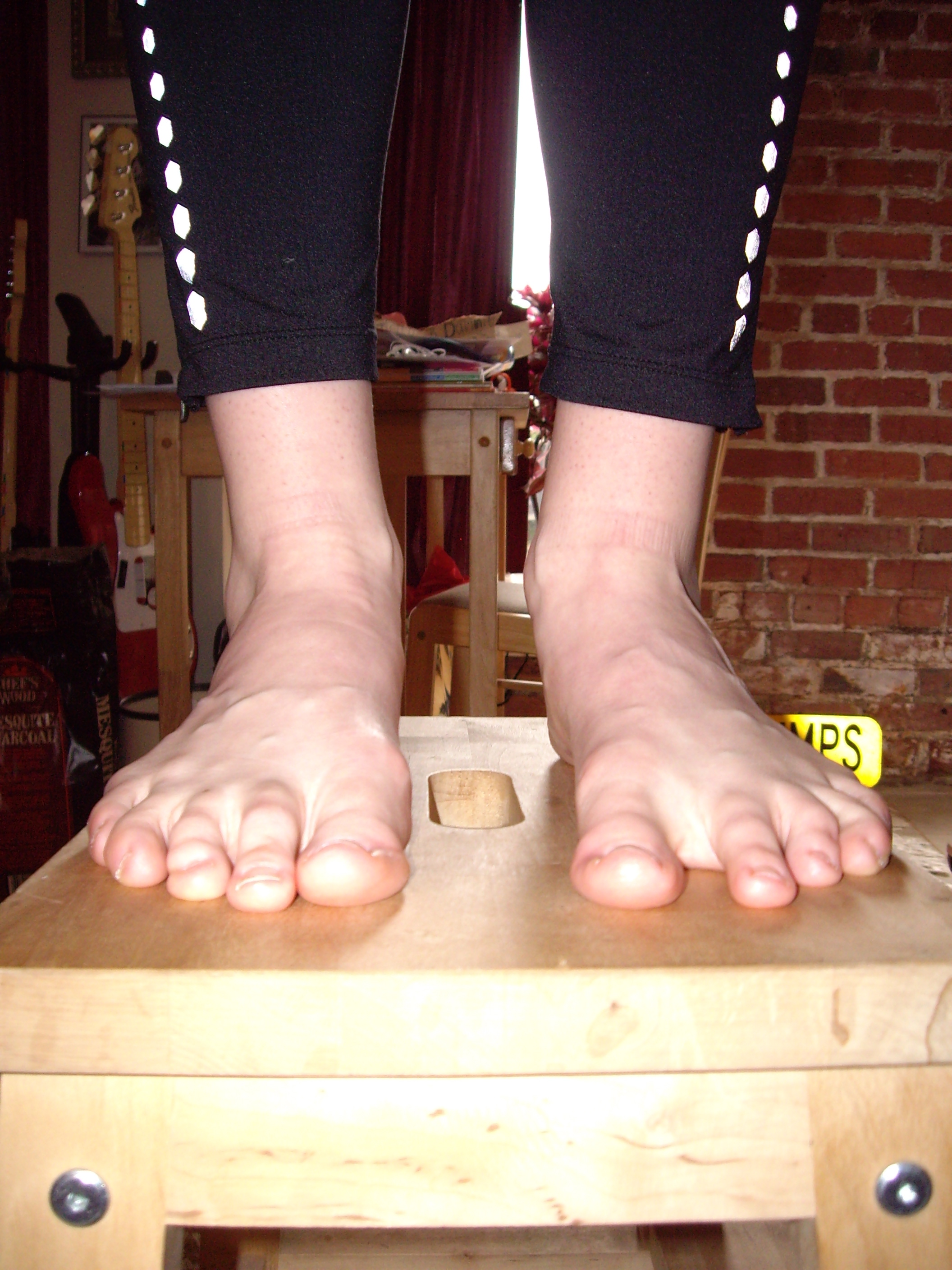 2/27/10 Feet- Front |
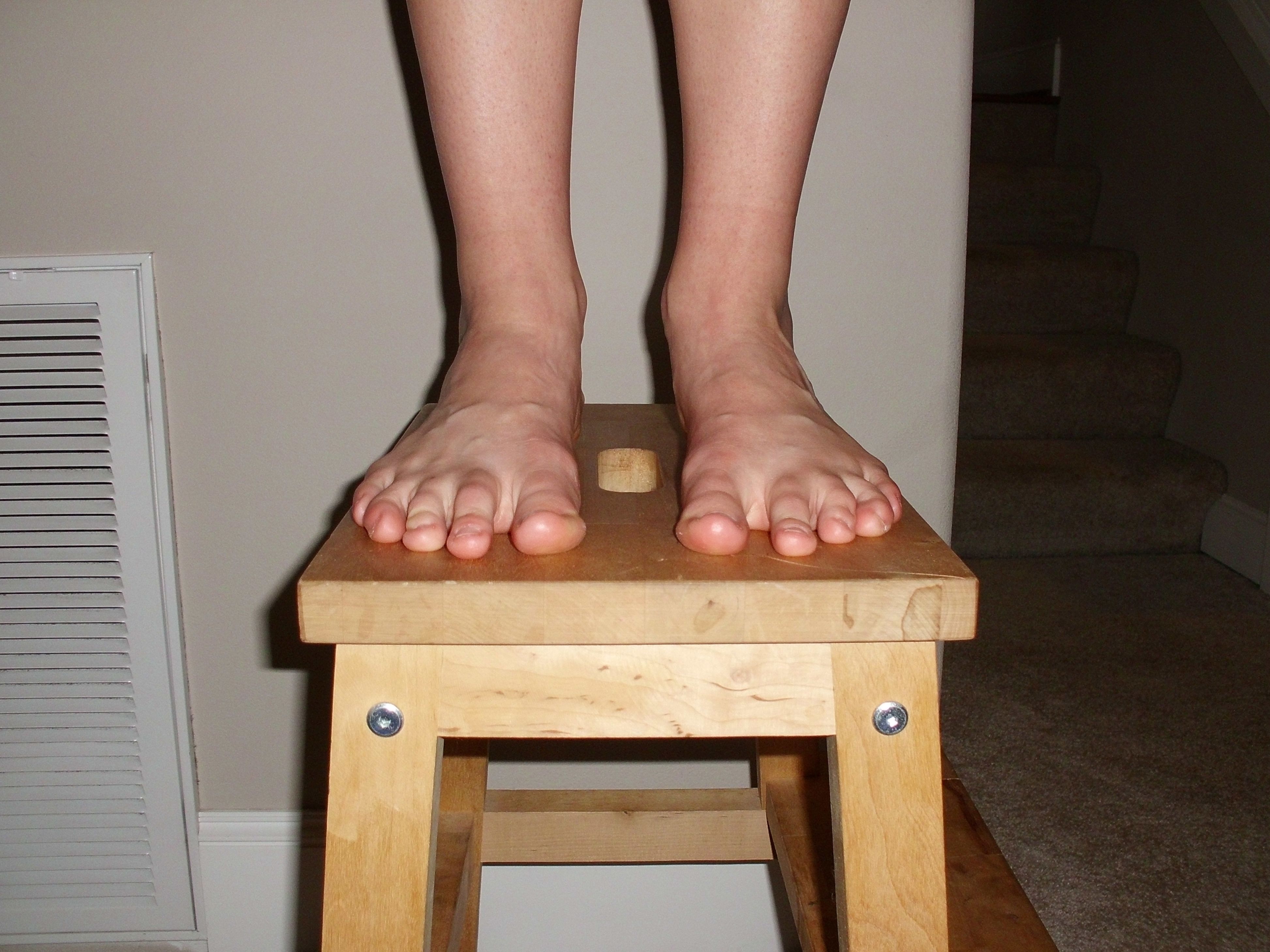 9/9/12 Feet - Front |
I remember going on and on about how toe splay was bad in my first post of pictures. Well, folks, I’m retracting that statement because it is untrue. You’re true toe position is supposed to be out on both sides of your foot. In other words, the wider the better. Think about it: if you want something that is taller than it is wide to stand with more stability, a wider base is best. Duh! Thus, my right foot is getting more toe splay, which is giving me more stability and better maneuvering, hopefully.
The left ankle is still unfortunate looking with a lot of pronation, but it certainly does look stronger.
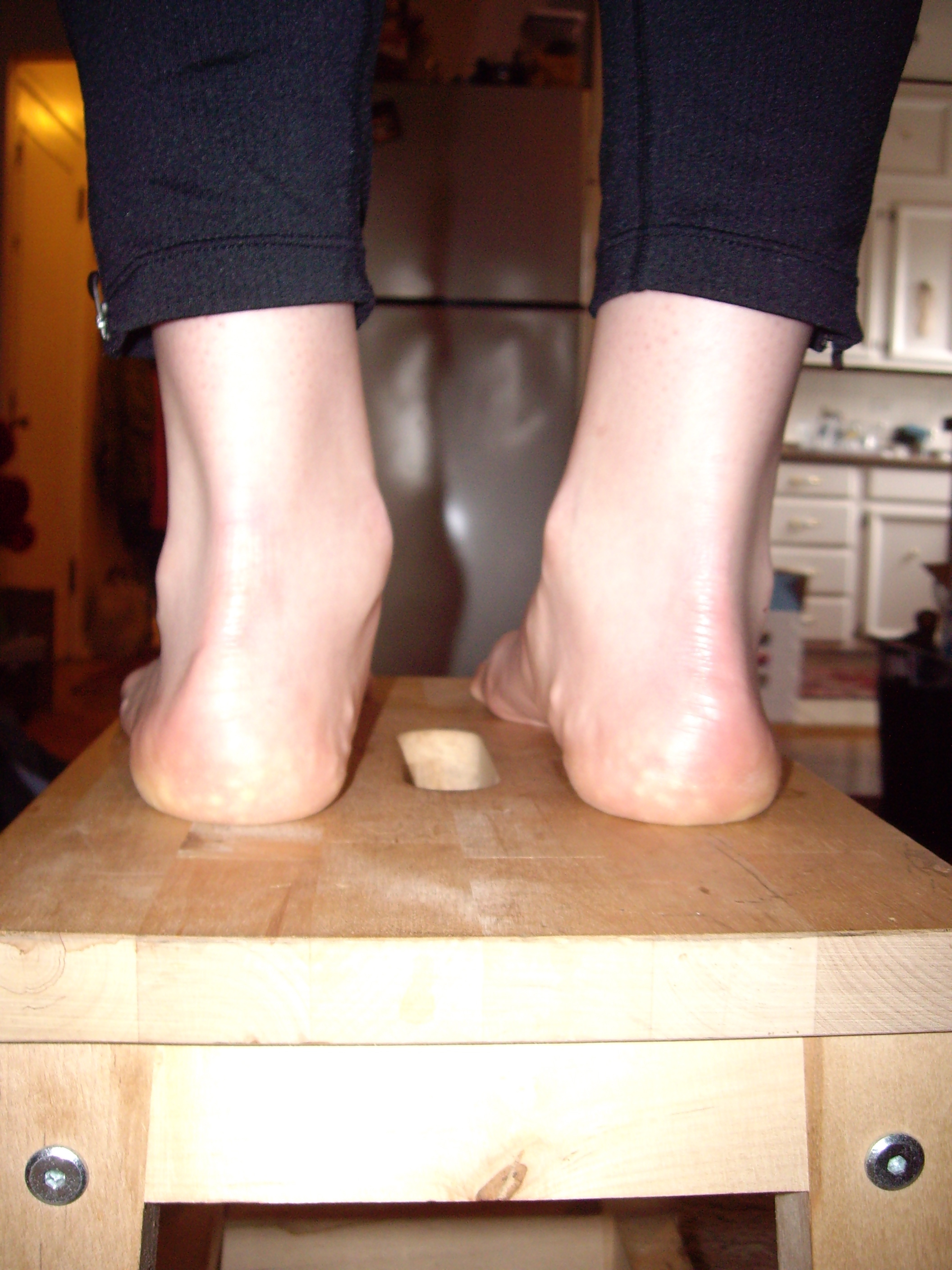 2/27/10 Feet - Back |
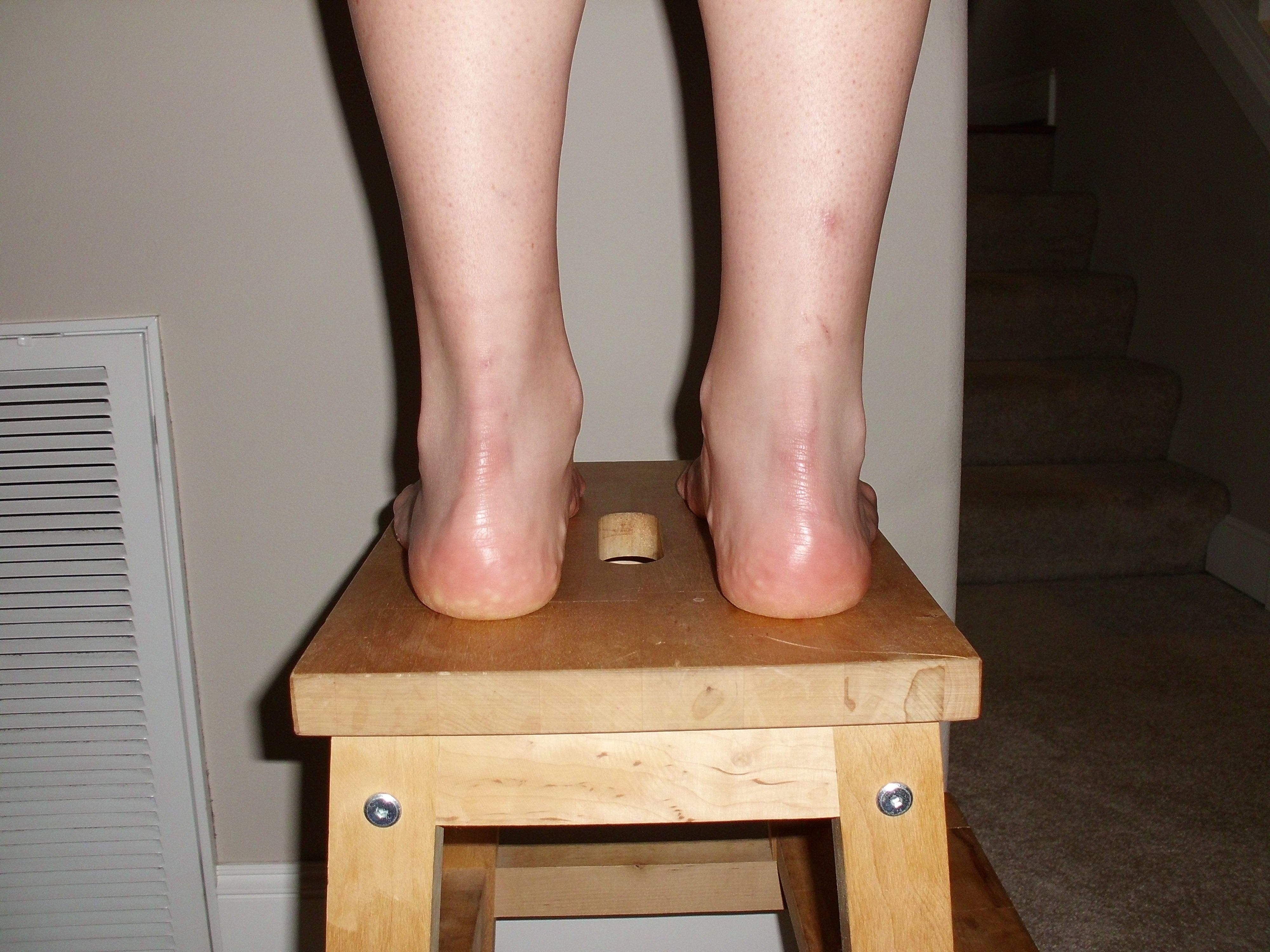 9/9/12 Feet - Back |
From the back, check out how straight that left ankle looks from the back! Oh yeah!!! I still cannot believe I ever ran on that left ankle two years ago. OUCH!
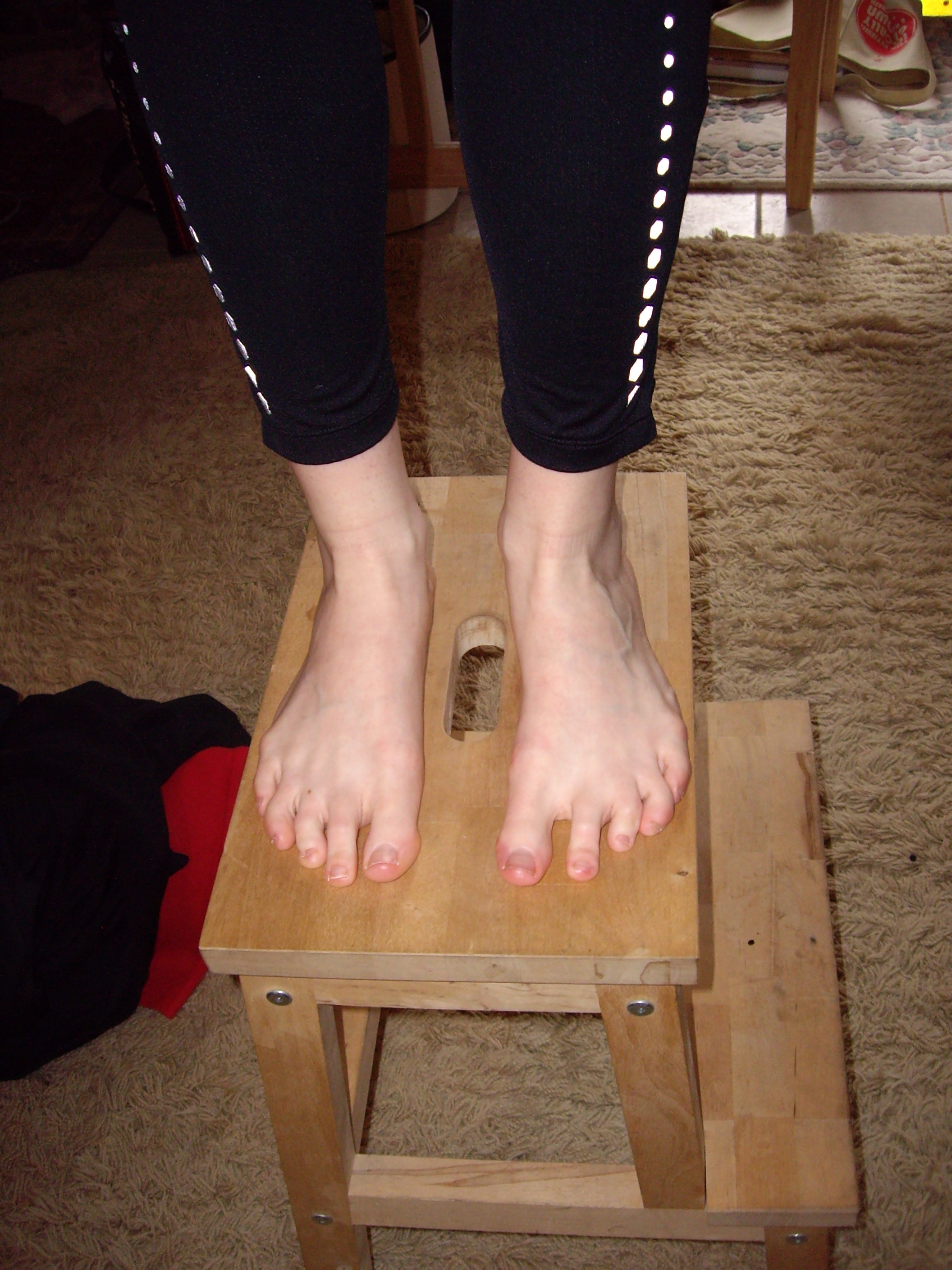 2/27/10 Feet - Top |
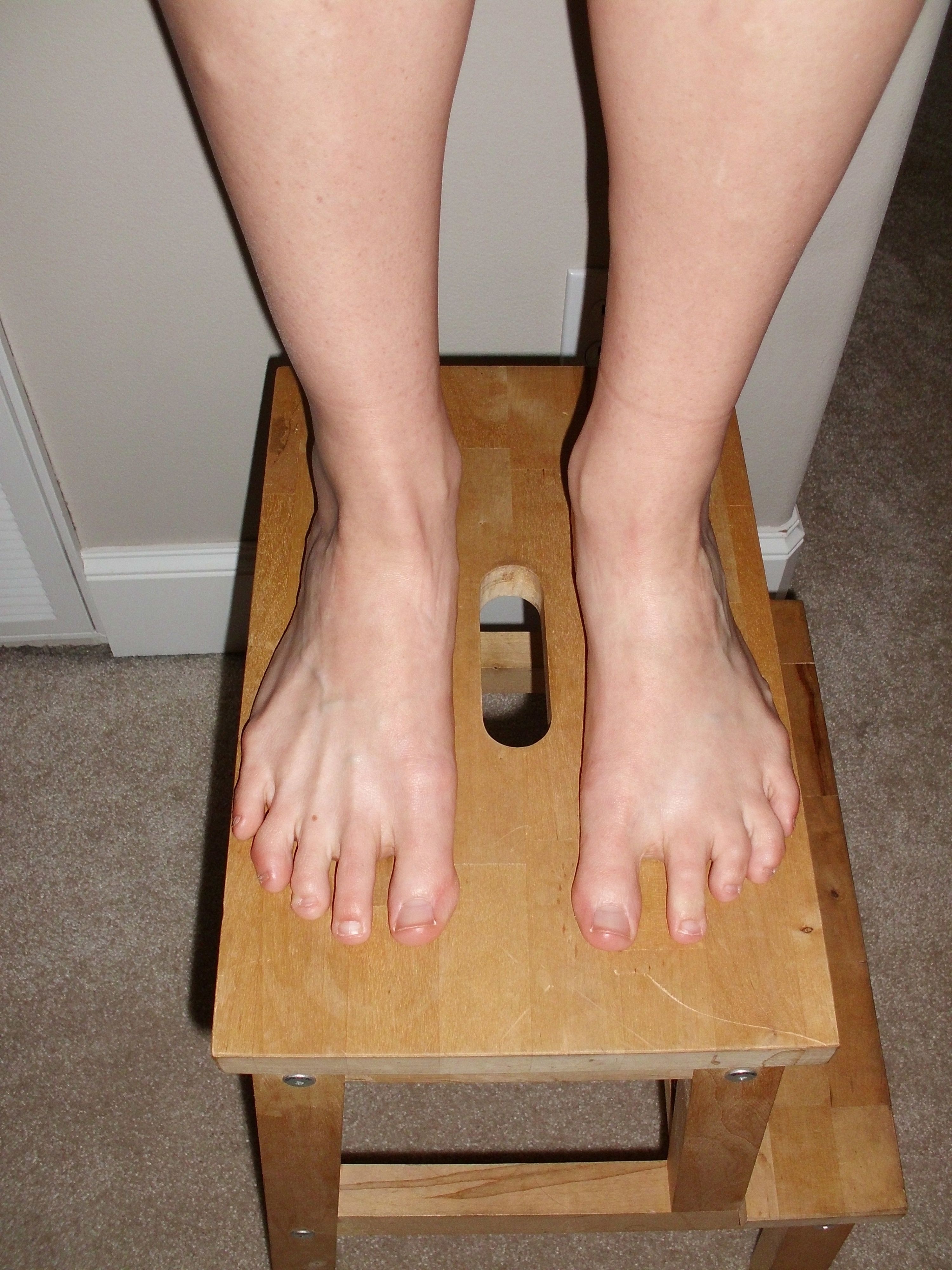 9/9/12 Feet - Top |
My after pictures 9/9/12 are actually taken after the Iron Girl race, and my left foot looks swollen. My right foot looks like a beast from the top with all those veins and bones, while the left foot still looks weak and smooth on top. Hmmm. I wonder what is going on here. AND I am very surprised to see not so much difference in the appearance. Yes, the ankle looks stronger, but the foot is still much weaker looking than the right. Ok. I’m all over those PT exercises!
Well, this was an inspiring exercise for me. I hope that you will take a good look at your feet and see what you might do to help those little guys carry you to all the places you would like to go!
p.s. A huge thank you to my wonderful husband who formatted this post!
2/27/11 – One Year Pictures!
Posted by admin in My History on March 10th, 2011
I cannot believe it, but, yes, it has been one whole year since I began this journey. I think you will see that the differences in my feet are quite noticeable. Without further adieu, the pictorial evidence:
Before 2/27/10
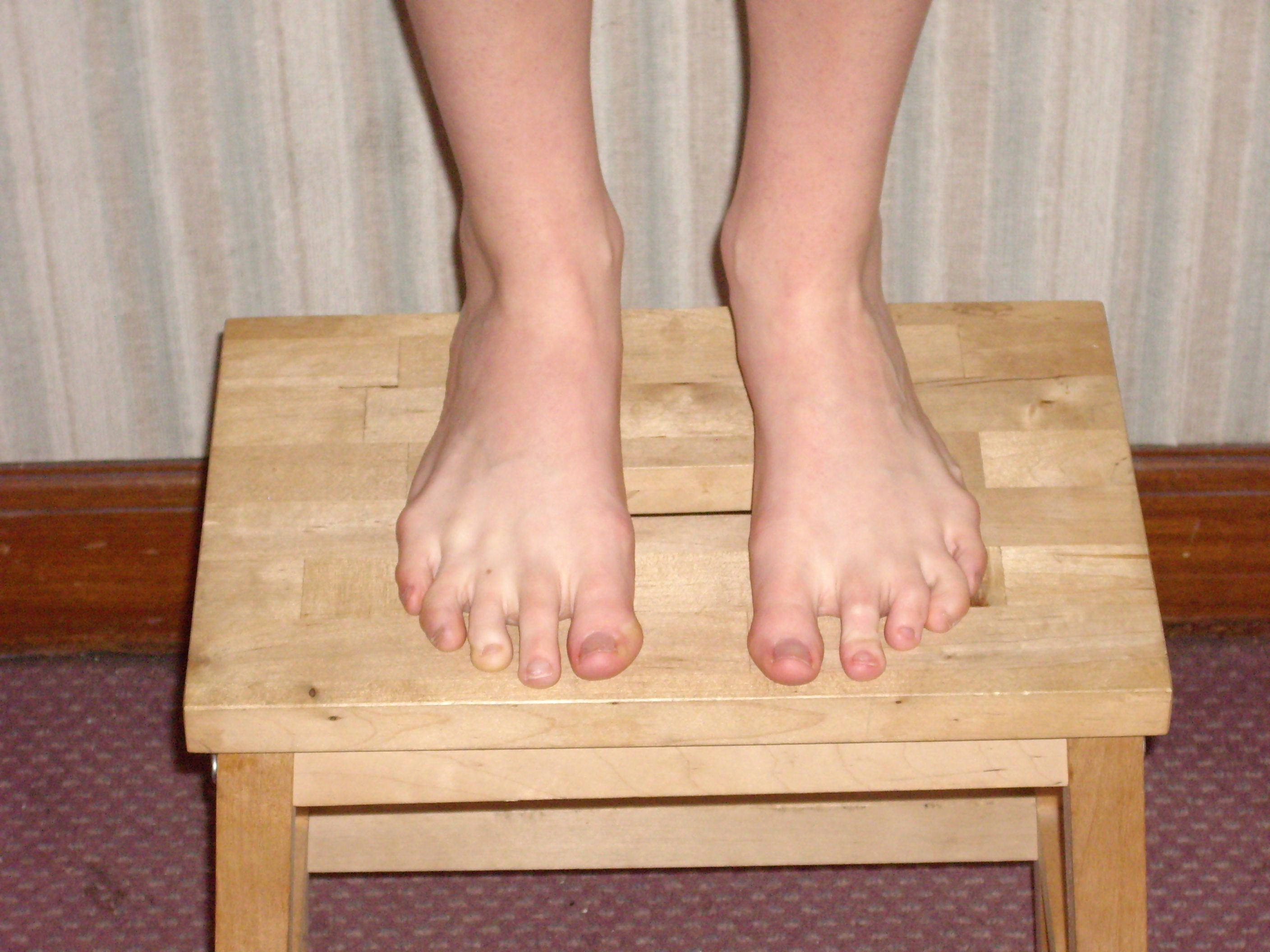
One Year 2/27/11
In picture one, you can see that my left foot is noticeably less thick just below the toes than my right foot. Also, the second toe on my left foot is very far away from my big toe, which is due to the inside sesmoid bone having been removed years ago. One year later, the left foot is not only noticeably thicker, the second toe is not nearly so far away from the big toe. Awesome improvement for me 🙂
Here’s the money shot:
Before 2.27.10
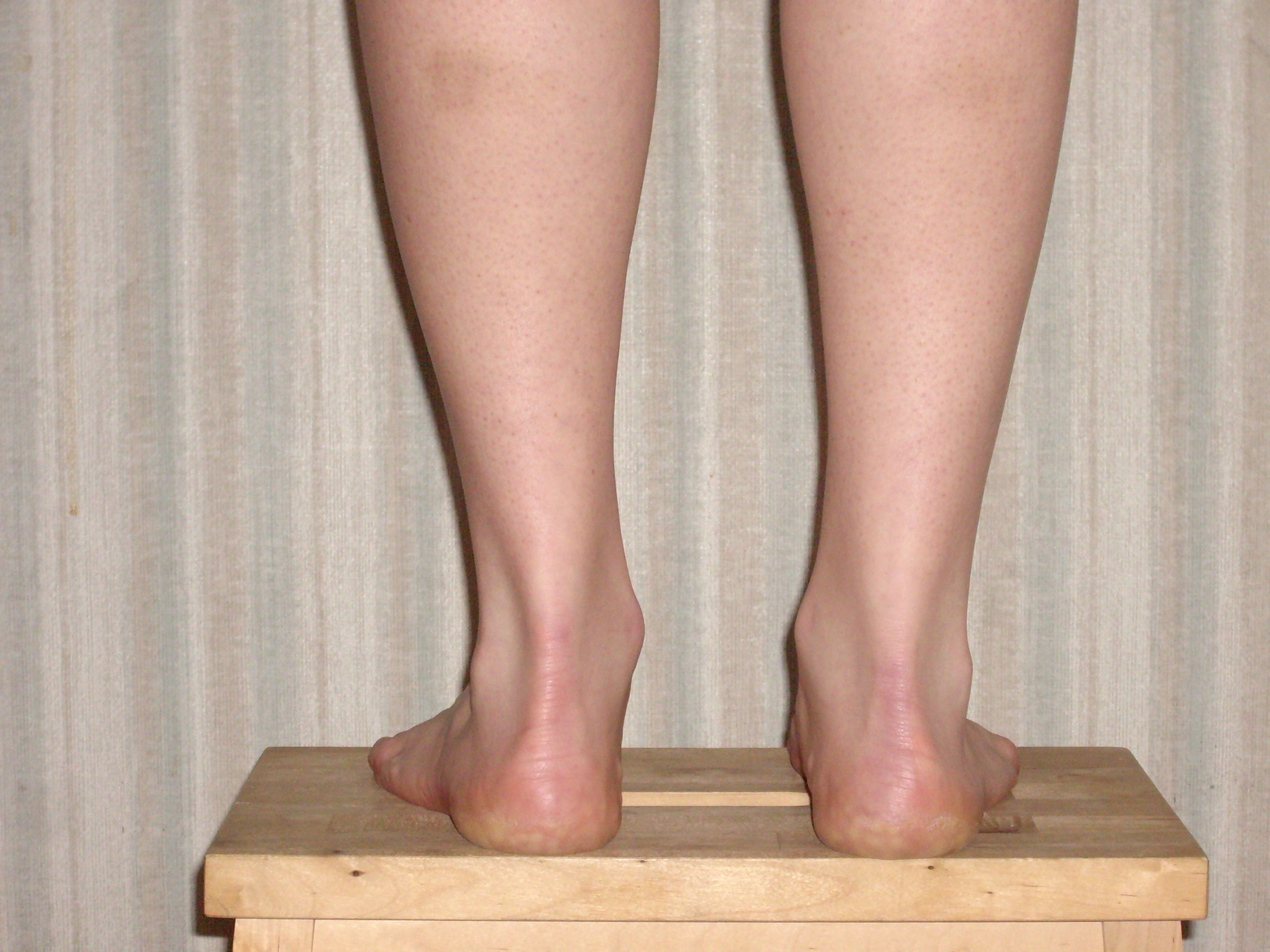
One Year 2/27/11
Holy crow! Are those even the same feet, Batman? YES, yes they are the VERY SAME FEET!!! I cannot believe it myself in looking at the pictures. Of note, the left ankle still looks a little unfortunate, but not nearly so everted (I think) as before. The ankle bone looks to be more toward the center, and, overall, the ankle looks stronger and more able to provide support upward.
THE FEET!
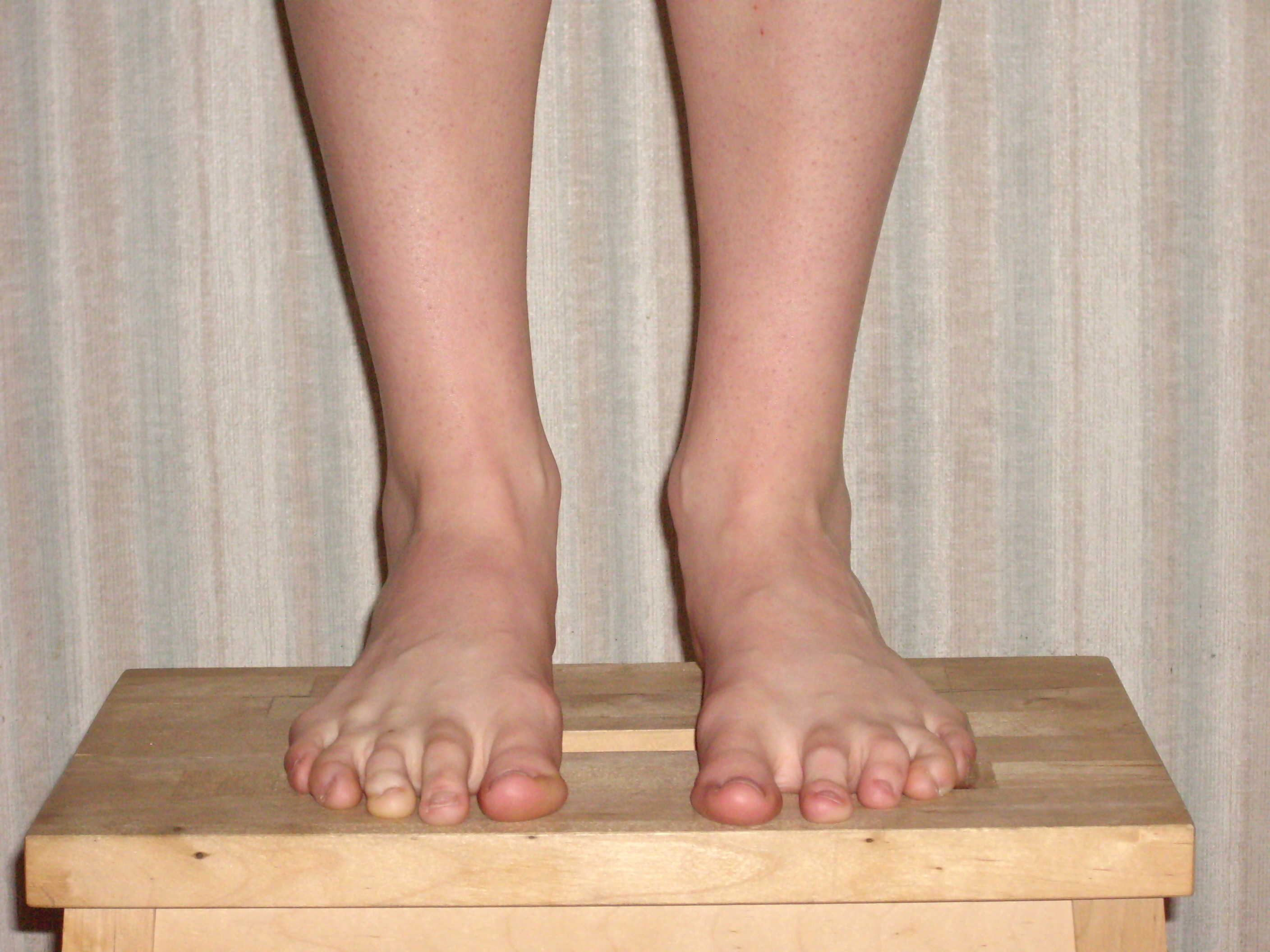
One Year 2/27/11
The first picture was from 2/27/10, and just look at the splaying of the toes on the left foot. Now, compare the 2010 splay to the 2011 splay – WOW! It has really been reduced. Â I cannot begin to describe how good it feels to know that my feet are not without hope. The thickness of the left ankle has improved s has the definition of the muscles coming off of the foot and up into my shin. I’m not sure of the names of those particular muscles/tendons at present, but that is part of what is helping to realign my foot, I’m sure.
So, I’ve made a lot of improvement, but the journey is not over as I am still unable to commit to a full-time barefoot life due to continued weakness in my posterior tibial tendon. My next steps are (and I have already started the ones with a *):
*1. introduce the VFFs into my daily life for 2-3 hours each day with increased duration in shoes over time
*2. workout in VFFs as my body permits (i.e. I will not workout in VFFs if my tendon is still sore in order to help decrease the chance of inflammation. Sore is okay, but inflammation stalls workouts.)
*3. ease back into running using VFFs and a treadmill (currently walking 2 min, running one min, walking 1-2 min, running one min, walking until reach 10 min)
4. running outside in VFFs on softer surfaces such as grass or gravel using the alternating running/walking method
Here’s to freeing your feet! CHEERS!
10/2/10 – New Pictures! Eight Months and Counting :-)
Posted by admin in My History on October 3rd, 2010
Ok. It’s that time again! More feet pics on the intarwebs 🙂
Let’s start with the February 27, 2010 pics and compare to now:
Front:
THE FEET!
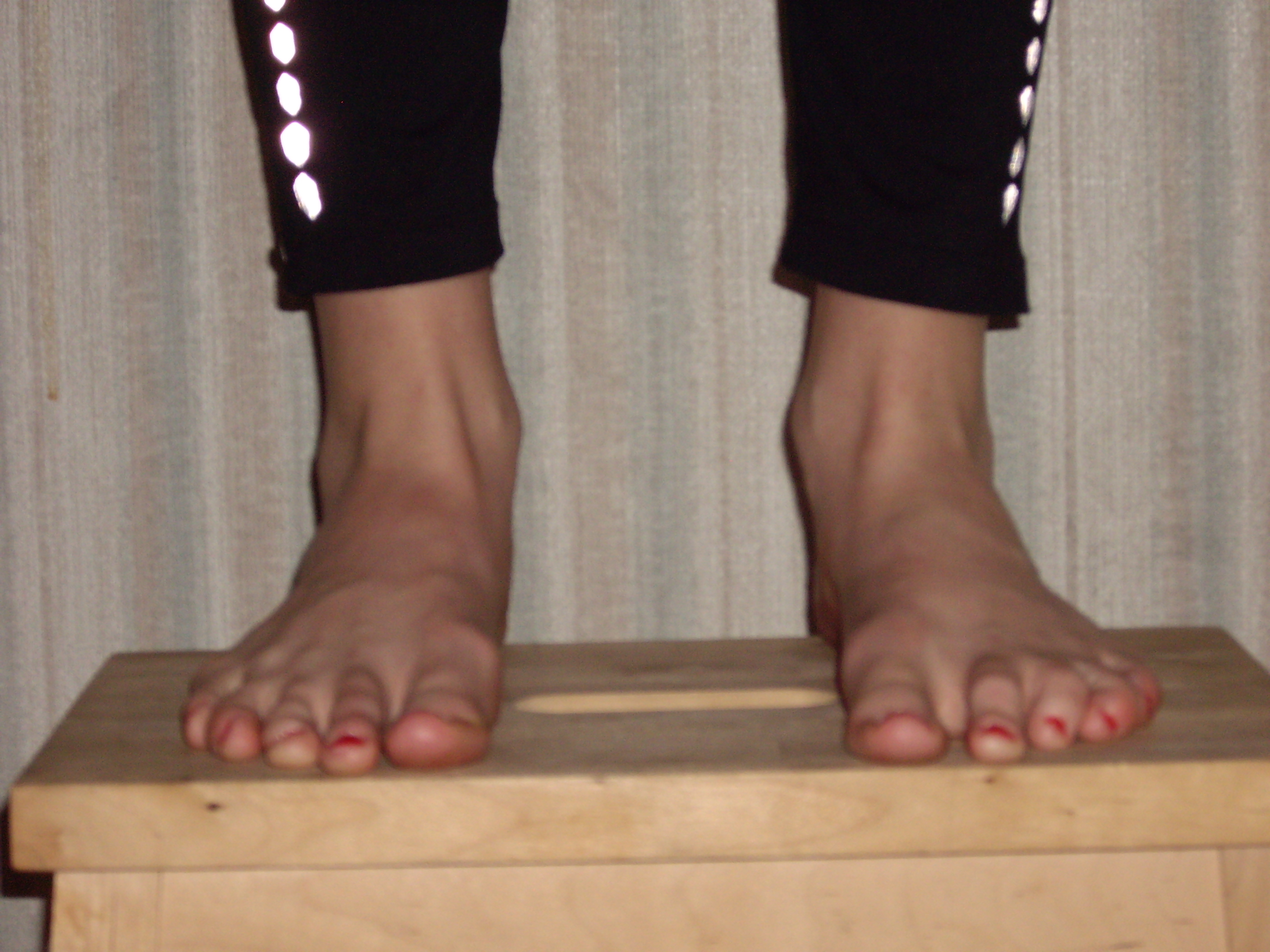
Feet Front 10/2/10 – Still Lookin’ Good!
So, the left ankle is still noticeably straighter, and the left foot is quite a bit larger and healthier looking! Yay! I wish I had taken measurements of my ankles to see the difference. I postulate that my left ankle is bigger now, but I don’t have the data to support that.
The Back:
Before 2.27.10
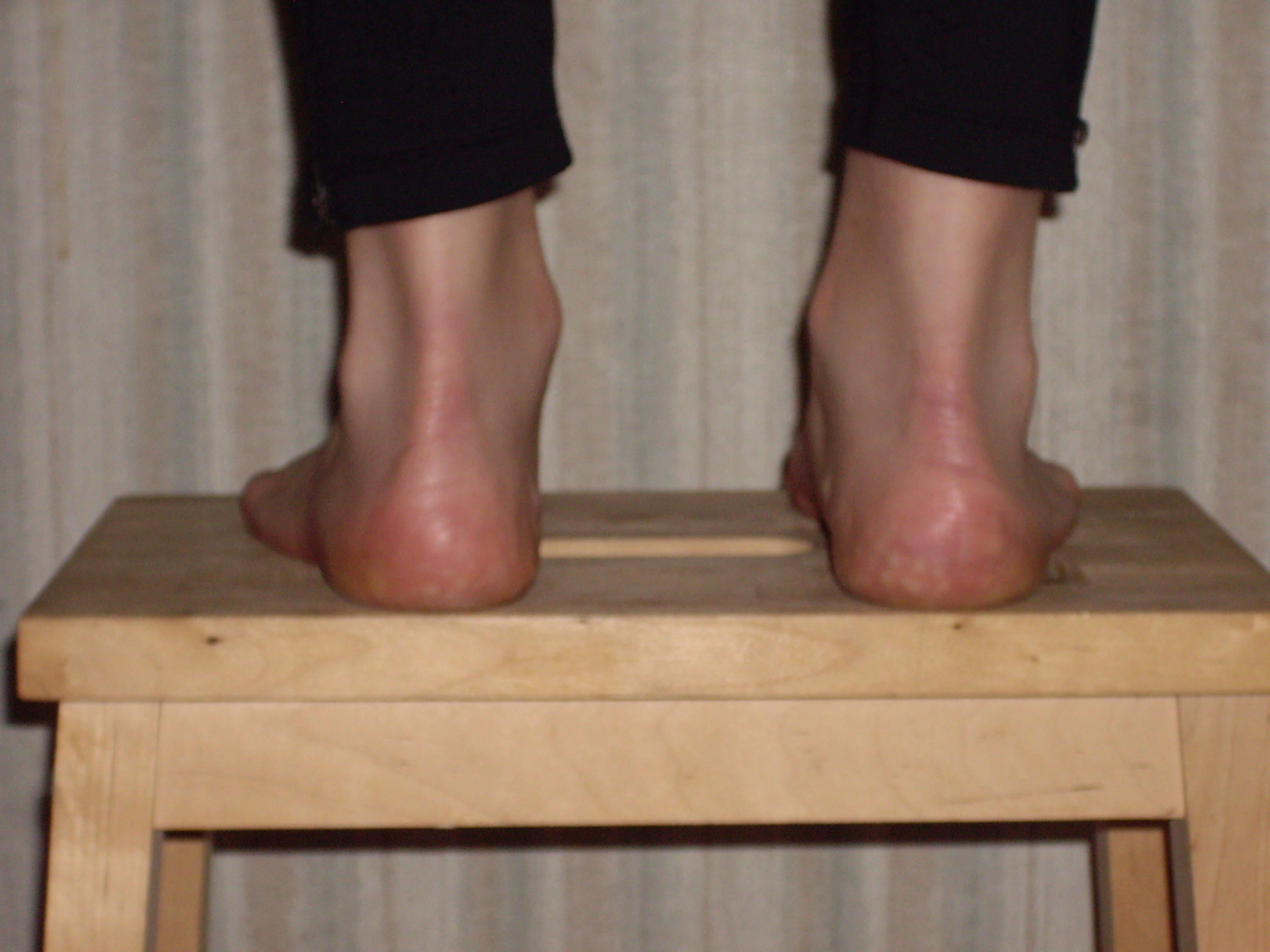
Feet Back 10/2/10
Yep – straighter and straighter on both ankles. ‘Nough said.
From the Top:
Before 2/27/10
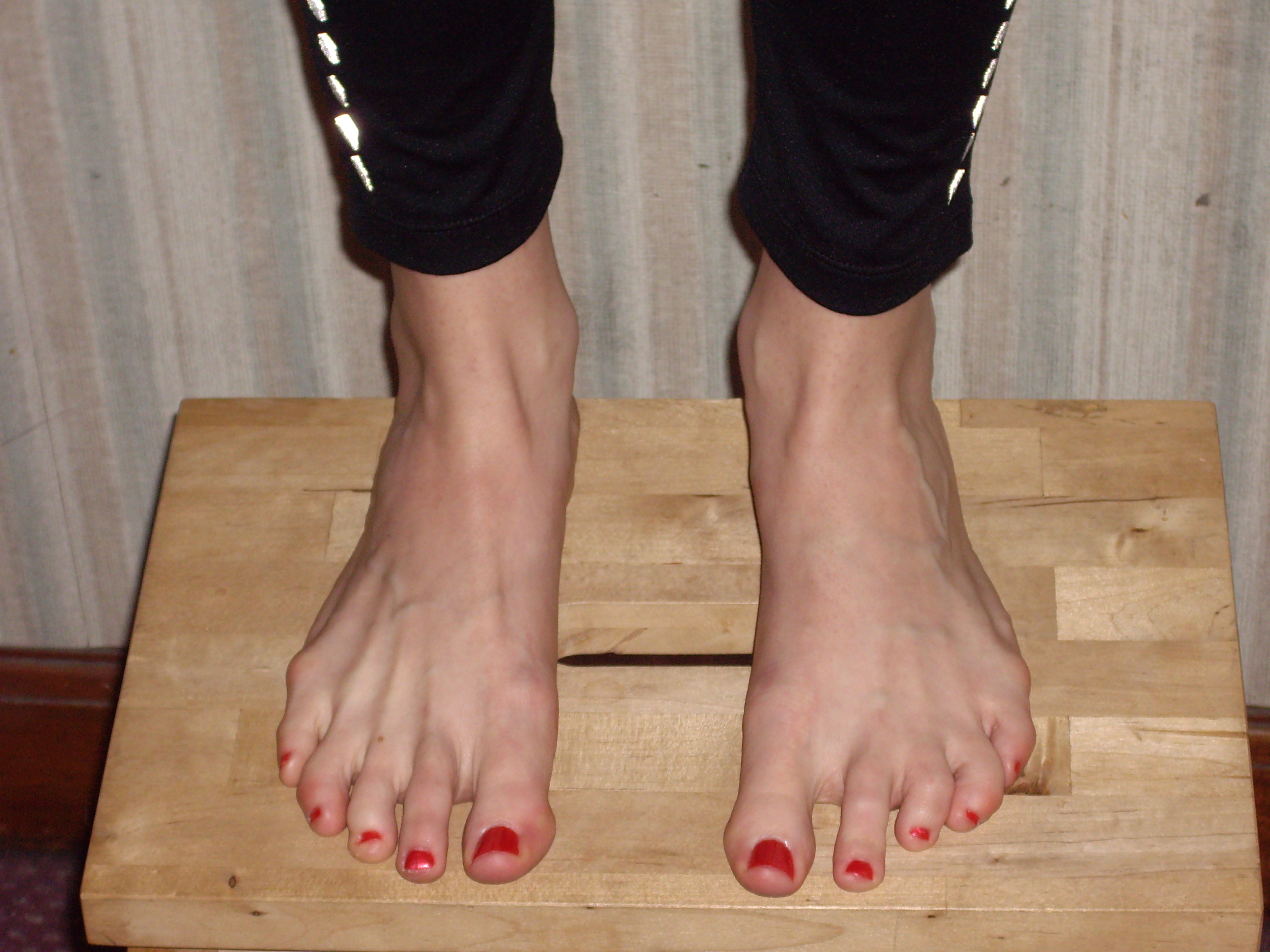
Feet Top 10/2/10
The left foot is still, today, somewhat more unfortunate than the right foot, but it does not resemble a fan any longer. I can see that there is work to be done to continue “beefing up” that foot so that it does not look like it collapses toward the outside. However, it looks so much healthier than before.
I still marvel at how I ever ran on my feet previously. They were so ill prepared for running, and I didn’t even ease into it. I just started running 2 miles. It is a wonder that my feet have not suffered more damage. The human body is truly impressive, biomechanically speaking.
I also took more pics of my body as a whole to see if there are improvements.
The front:
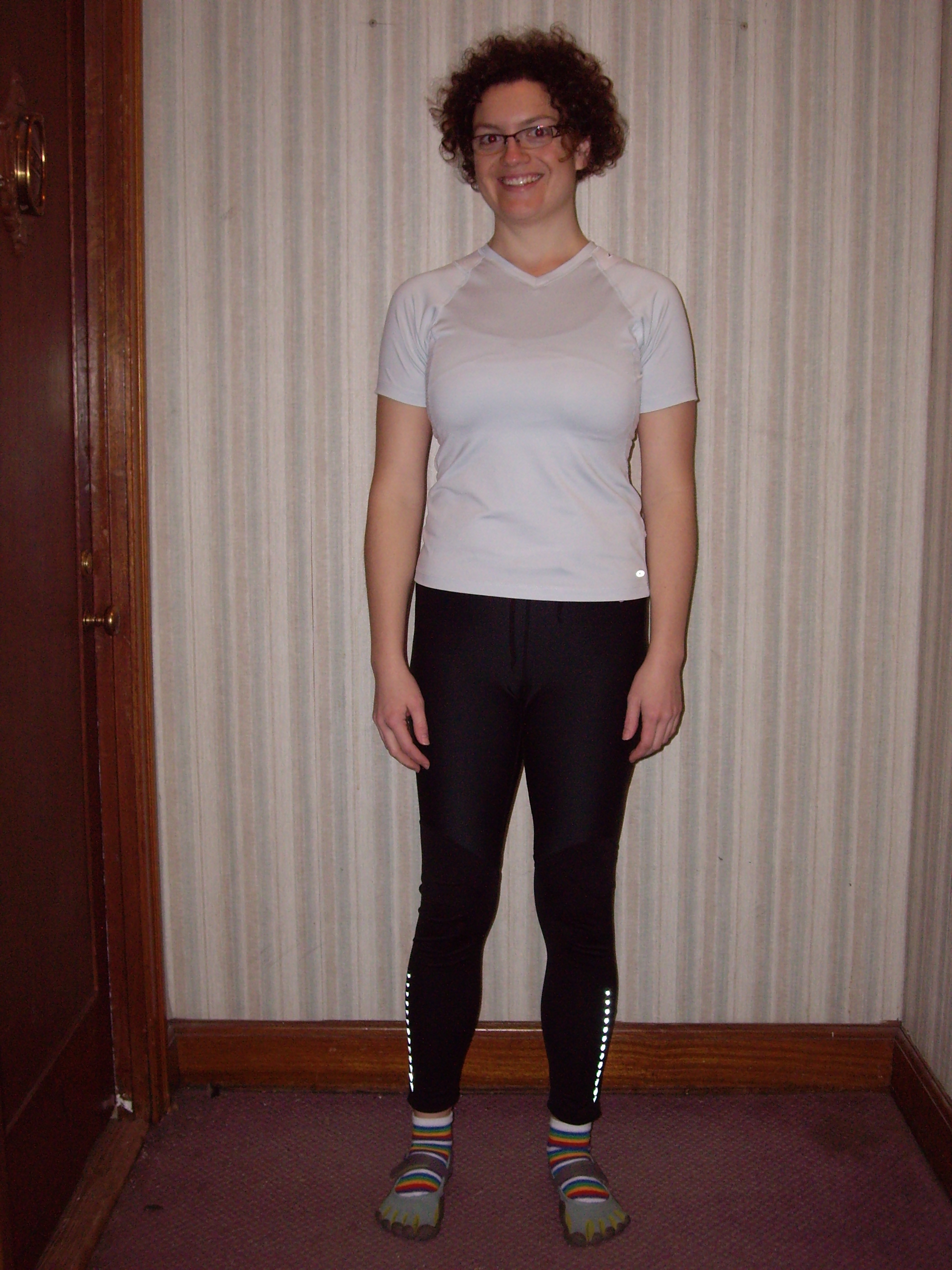
Running Gear Front 2/27/10
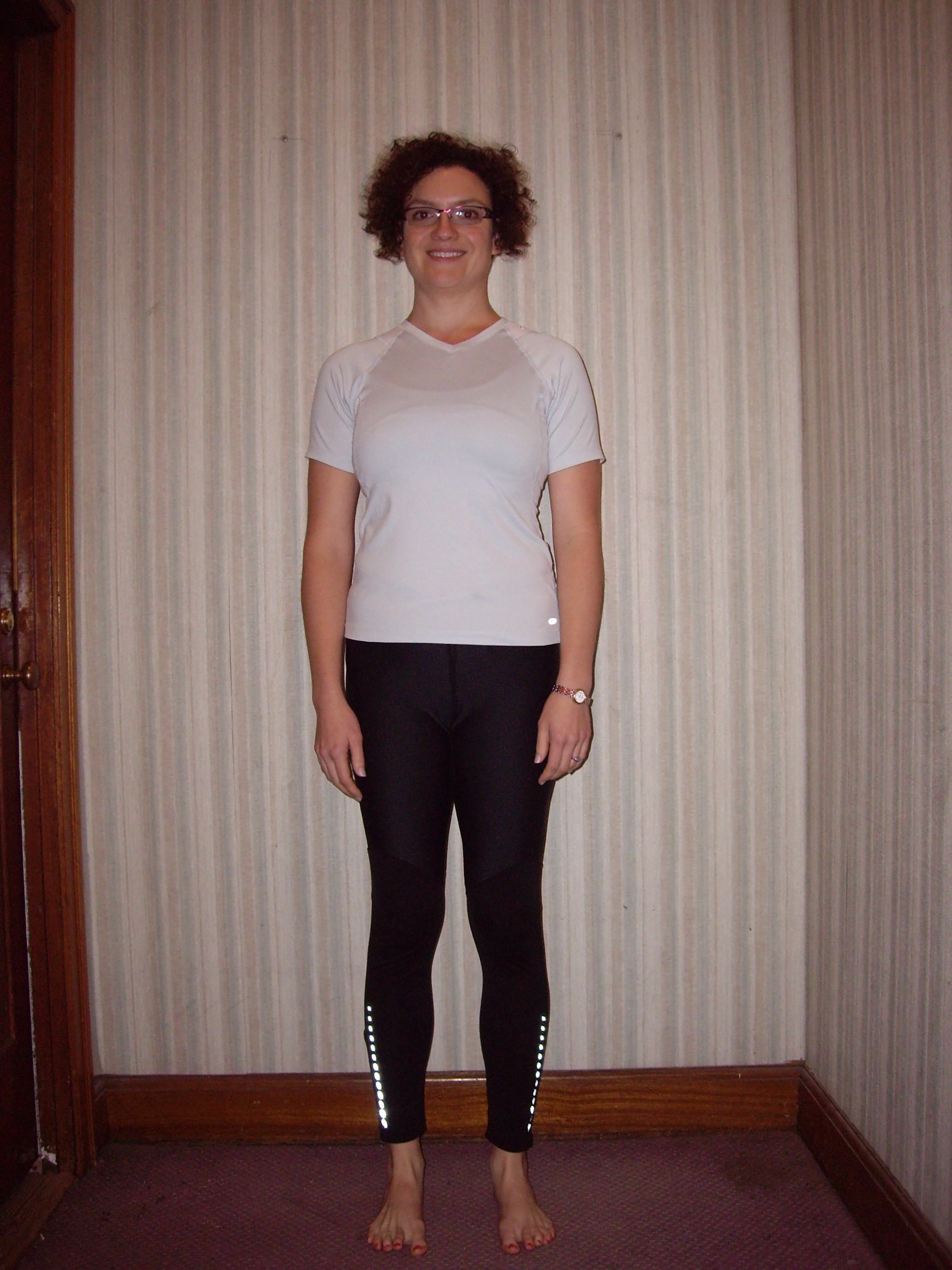
Front Running Pants 10/2/10
I cannot tell much of a difference in this gear. So, I decided to start a new comparison with shorts instead of pants.
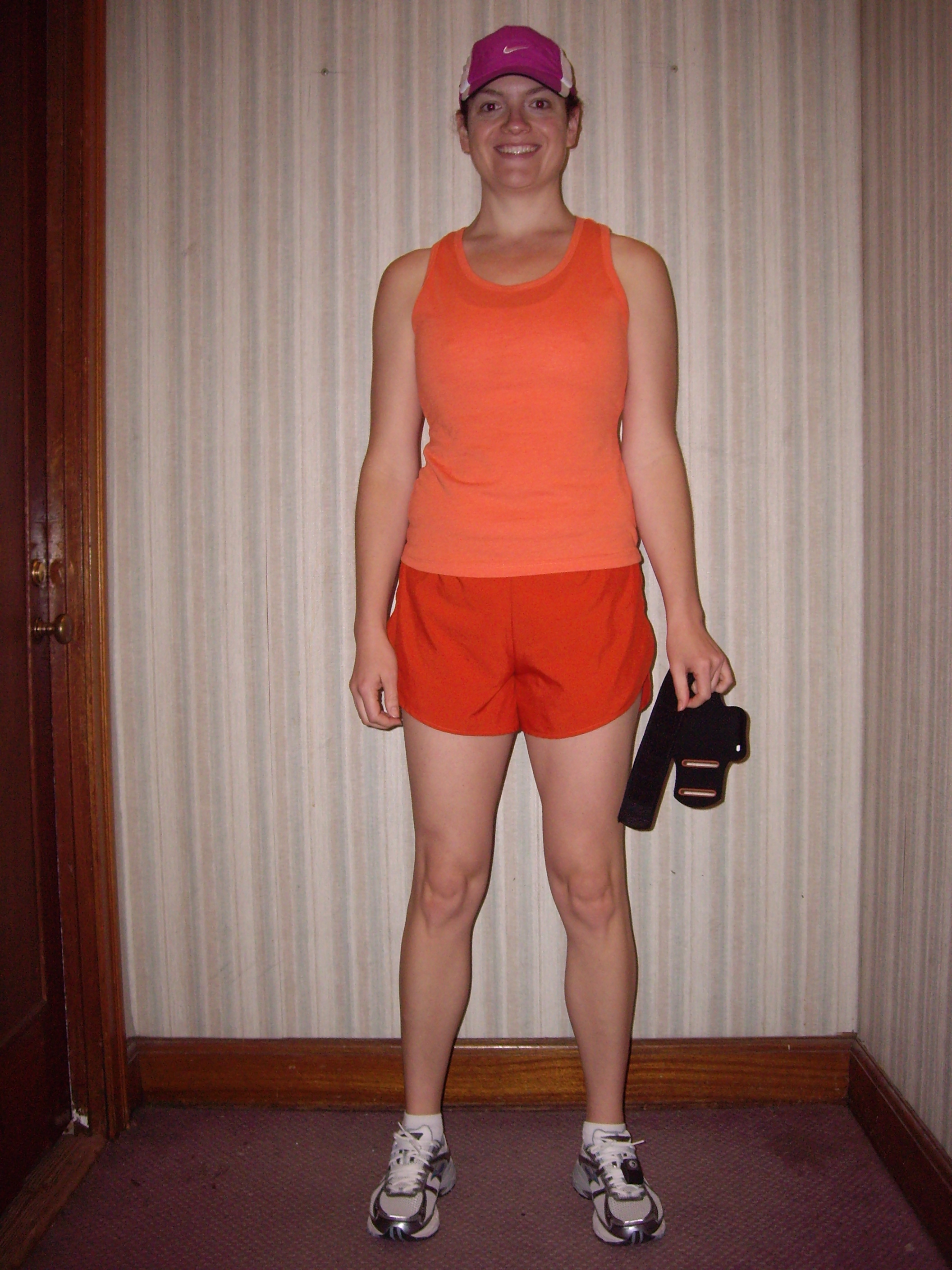
Front Shorts 9/25/10
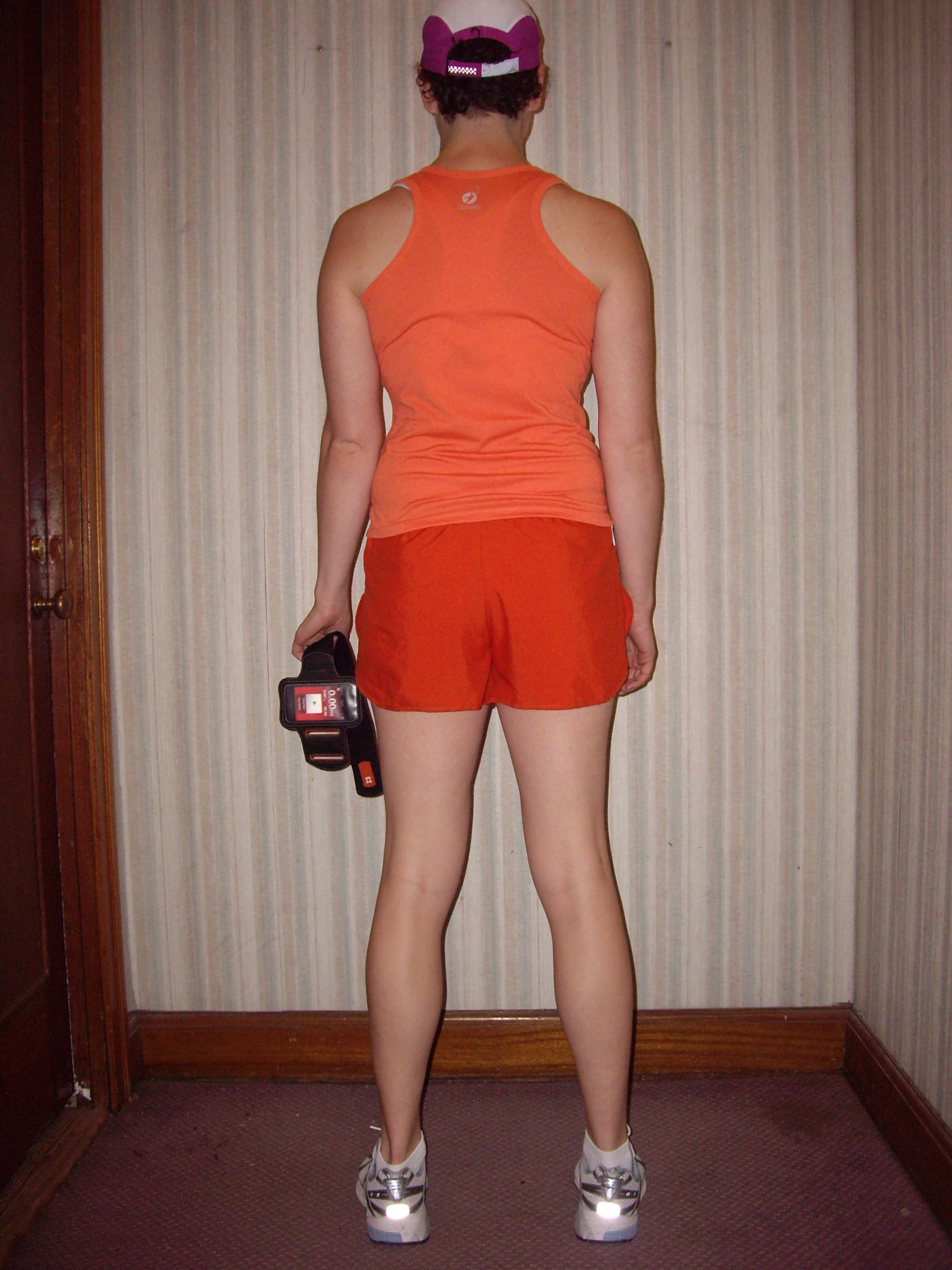
Back Shorts 9/25/10
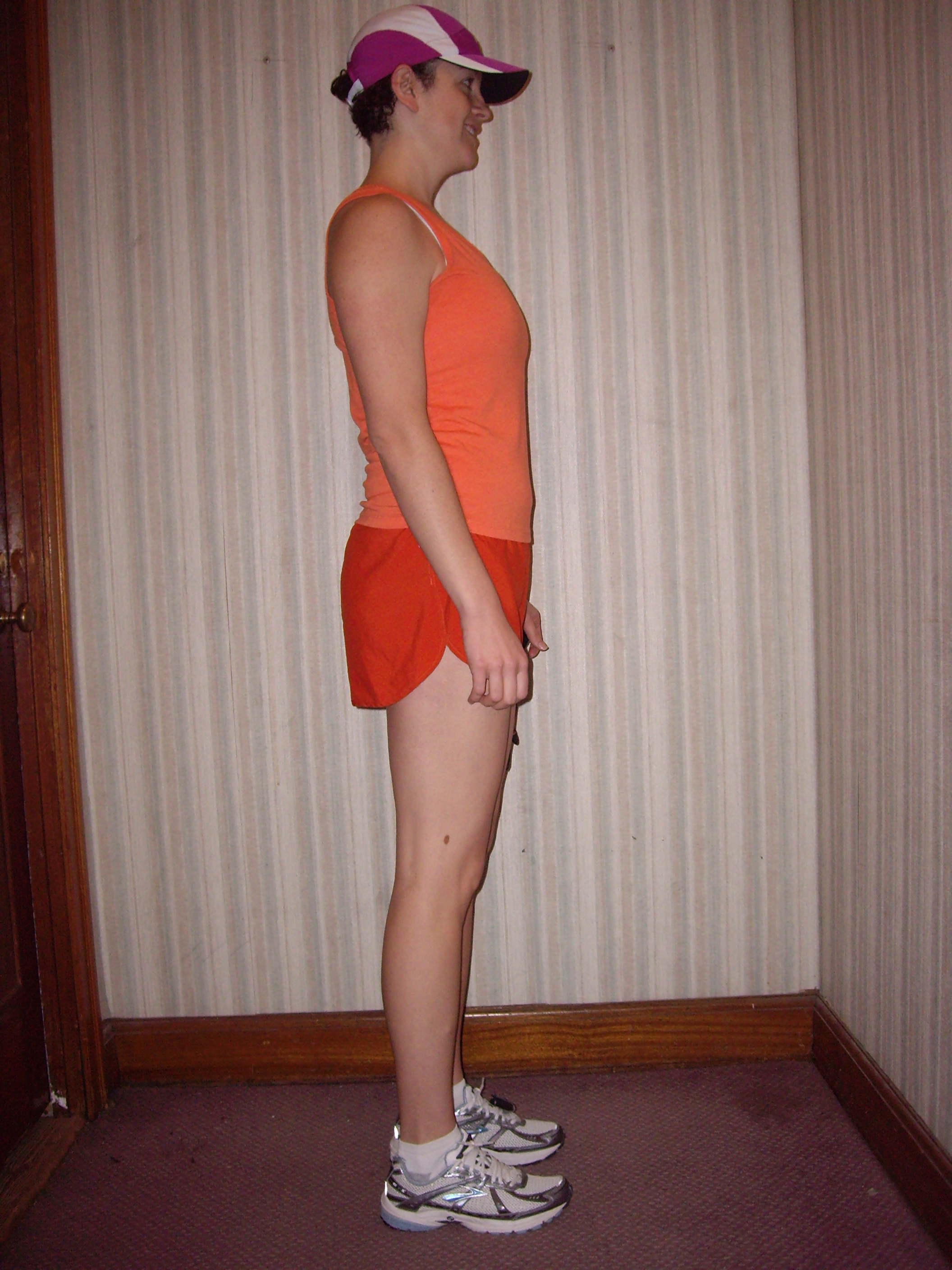
Side Shorts 9/25/10
So, those are my new stability shoes in the pics. Also, I wanted to be able to compare the muscle tone in my legs as well as my shoulders, which was not happening with the pants and other shirt. I don’t think I’ll get hit by traffic anytime soon….
All this aside, my new goals are as follows:
1. In two months, I would like to see more development in the muscles of my left foot and ankle. I have been putting off the foot specific exercises in favor of my shoulder exercises, but now, I think it is time to return to the original plan.
2. Overall better muscle tone across the board. I have been working with Melissa on this, but my schedule and general laziness have severely impaired my progress in this area. I am currently working out about twice per week – NOT ENOUGH. My goal is to do my workout from Melissa at least 3 times per week.
3. Better cardio training. I would like to do elliptical at the gym 30 minutes 3 times per week with actual running happening twice per week. I think this would ease my feet into the longer distances with much less inflammation.
4. More time in my barefoot shoes. My goal is to wear my barefoot shoes for 2 hours each day for 7 days. Then, up the time each week by 30 min per day.
Ok. Time to get to work! See you at the gym 🙂
Ponseti Method
Posted by admin in My History on March 27th, 2010
In my earlier post about myself, I mentioned that I was born clubfooted. Both of my feet turned in to where the bottom of each my feet touched the ankle. It is my understanding that in the mid-70’s when I was born, surgery to release the foot was the most popular method to “fix” this problem. However, the surgery leaves the patient with shortened tendons, less mobility, stiffness later in life, and overall pain when walking forever.
I was incredibly lucky that my parents decided to bring me into this world at Baptist Hospital, which was not in our very small rural hometown. The doctors at Baptist used a method to correct my feet using casts to hold my feet in place for the first six months of life. Then, I wore really weird looking braces (the shoes for these braces looked like they were on the wrong feet) for the first year of walking. After that, I had flat feet, but they worked fine.
As I was researching subtalar neutral, I found the name of the man who invented the cast and brace method of treating club feet, Dr. Ignacio Ponseti. He invented this method in the 1950’s, and it is now being taken to countries around the world. They have found that clubfoot can be treated in older children as well.
Having been a successful recipient of this method, I feel very indebted to Dr. Ponseti and the Ponseti Method. Although I gripe about my feet not functioning correctly, I cannot imagine what my blog would say had I been treated with surgery or, even worse, not been treated at all.
So, I dedicate this blog to a man I have never met, but without whom I would not have the potential to run. To Dr. Ignacio Ponseti (1914-2009), thanks for helping me run barefoot!